Field notes: the flare stack that lit three weeks before anyone announced startup
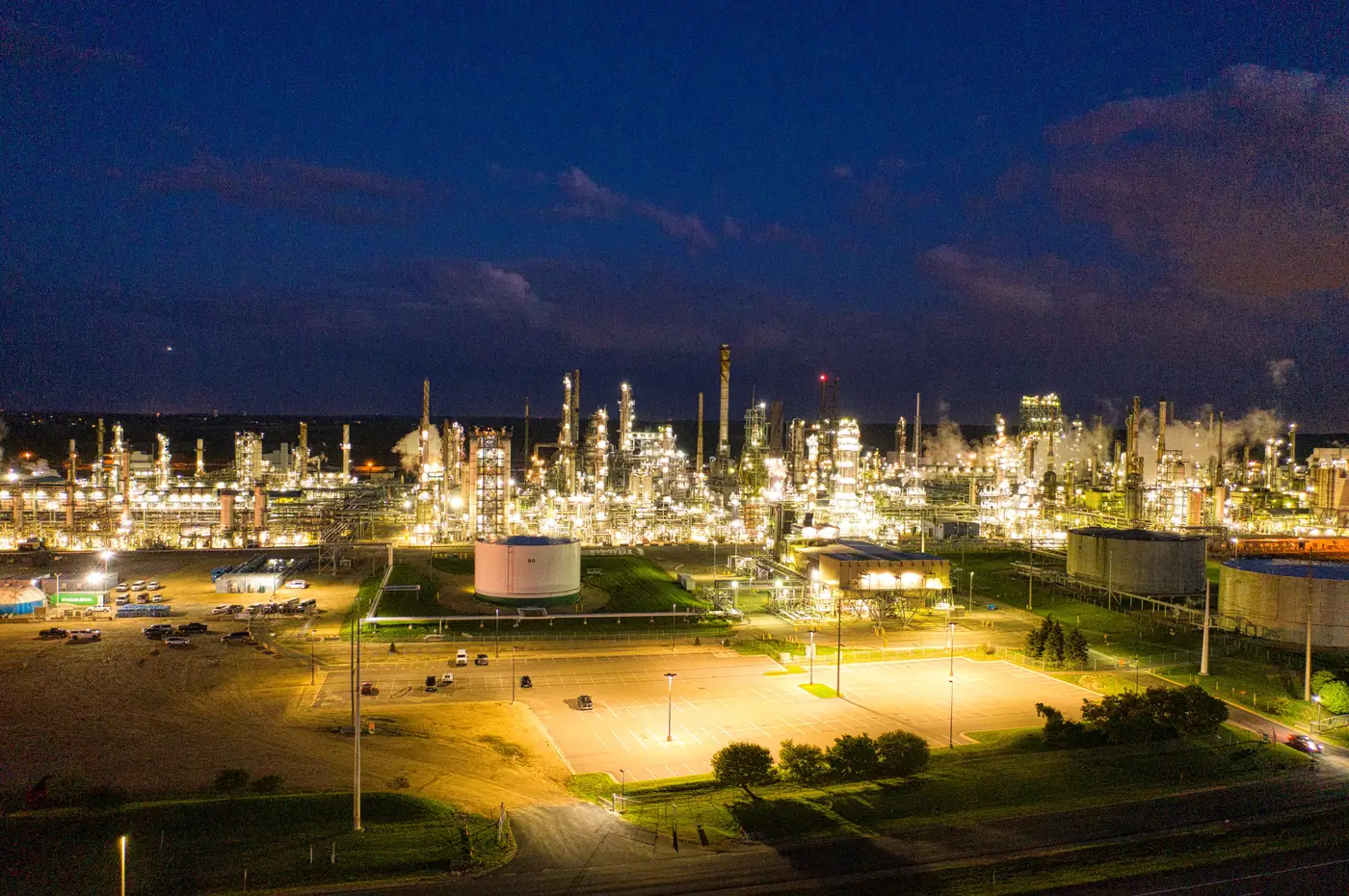
A photo showed up in a trading desk group chat on a Tuesday night: a flare stack at a Gulf Coast refinery expansion, lit up orange against a dark sky, timestamped and geotagged by whoever took it from the highway shoulder. There was no press release yet, no investor update, just a flame and a caption that said, more or less, "that's not supposed to be running yet."
Three weeks later the operator put out the startup notice everyone was waiting for. The desk that had the photo early had already adjusted its positions.
This happens more than people outside the trade realize. A flare stack lighting ahead of any public announcement is one of the oldest tells in refinery and LNG watching, older than satellite imagery, older than most of the data vendors now selling "independent" progress reads. Commissioning crews flare for real reasons before a unit is anywhere near commercial startup: purging nitrogen out of new piping, burning off hydrocarbons during the first introduction of feed gas, running relief valves through a pressure test. None of that means the plant is making on-spec product. It means something downstream of mechanical completion is underway, and usually that something is further along than the public schedule admits to.
The trouble with the flare-stack tell is that it's a single photo from a single angle at a single moment. You don't know if it's routine commissioning flaring or an upset. You don't know if the modules that need to be set for that unit to run are even on site yet, or stacked on a laydown yard three miles away waiting on a crane slot. A flare lighting early tells you commissioning has started on at least one system downstream of mechanical completion. It doesn't tell you how much of the plant is built, and it doesn't tell you whether the three weeks of lead time you think you have is really three weeks or really three months, because nobody's checked the structural progress independently against the schedule the EPC has been reporting all along.
That's the gap the flare photo can't close. The EPC's monthly progress report says 91% complete. The lender's covenant milestones are keyed to that same number. The trader's calendar spread is priced off an assumed startup window that also traces back to that number. Everyone downstream of the construction site is, in effect, relying on the contractor to grade its own homework, with a flare stack photo as the only outside check anyone has.
What a monthly read of the site itself gives you is something more boring and more useful than a lit flare: a record of module placement and structure growth, month over month, read off the ground rather than off a progress report. It doesn't replace the flare photo. It gives you something to check it against. If the rack piping and the compression train modules have been visibly moving for two months, a flare stack lighting early is confirmation, not a surprise. If the structure's barely changed since spring and the flare lights anyway, that's worth a second look before anyone reprices anything off it.
Refinery Progress tracks that second part, the part the industry chat groups and flare photos can't: an outside-the-fence view of what's been built against what the startup date assumes should have been built by now, pulled from imagery on a monthly cadence rather than from whoever happened to be driving past the gate that night. You can see what that looks like on the Refinery Progress home page.
If you're the one fielding the "did you see the flare" message at 11pm and wishing you had something steadier to check it against, that's exactly the gap this is built for.