Field notes: the tank farm that filled with water before anyone said a word
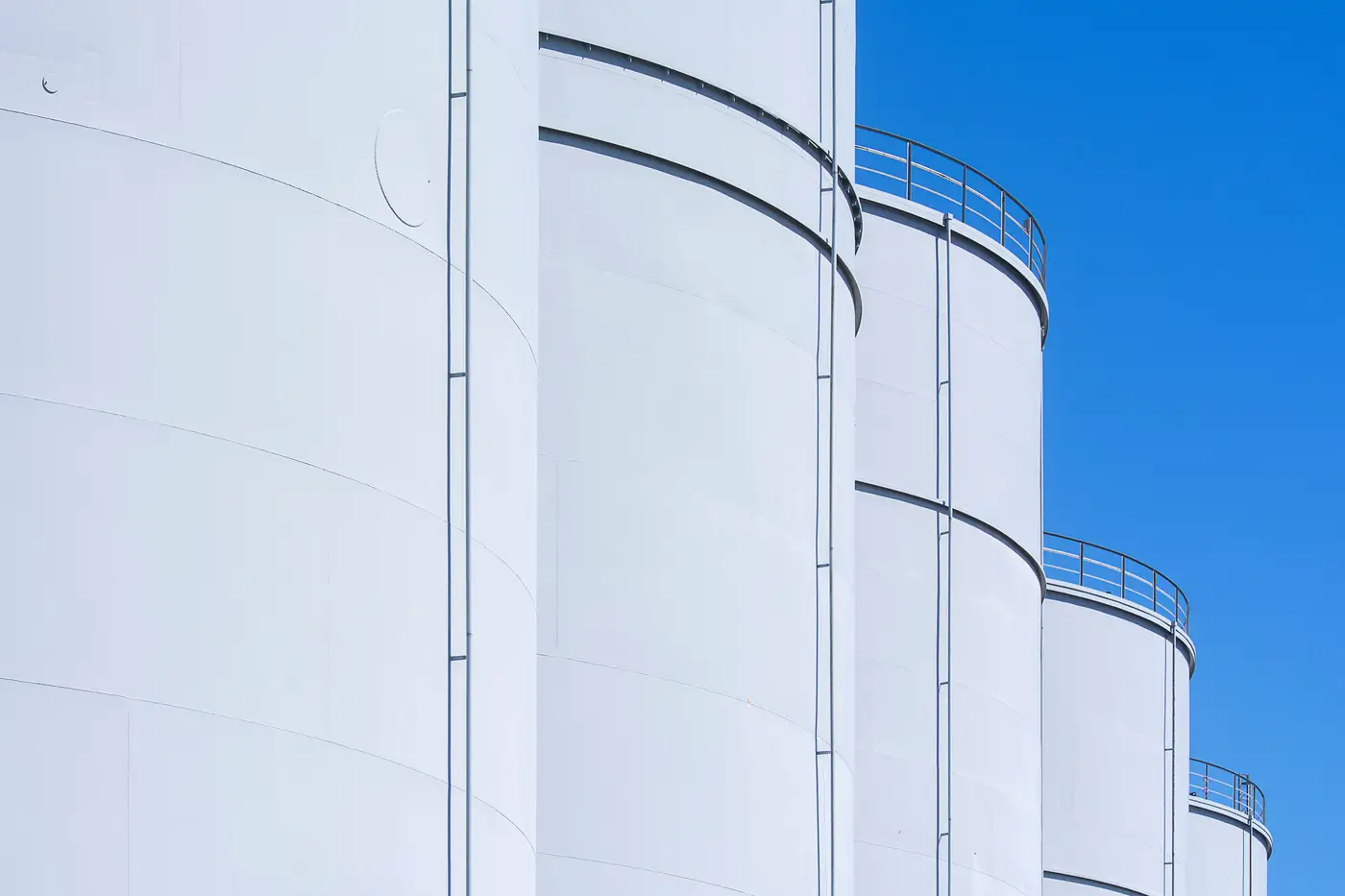
A few months back I was flipping through a stack of VHR frames on a Gulf Coast condensate splitter project, the kind of site where the EPC's monthly schedule update had been reading "on track" for two quarters straight. Nothing in the public filings had changed. No press release, no investor call mention, no line in the lender's quarterly monitoring report about a revised mechanical completion date.
But one of the floating roof tanks in the tank farm had a ring around it that hadn't been there the month before. The roof had dropped. The shell showed a waterline.
That's a hydrotest. Someone was filling that tank with water, floating the roof, checking the welds and the foundation settlement before anyone trusts it with actual product. It's boring, standard, unglamorous work. It's also one of the more reliable tells you'll find that a unit is closer to commissioning than the schedule narrative admits.
Why water, and why it matters to you
Hydrotesting isn't optional and it isn't quiet, at least not from above. A floating roof tank filled for API 650 testing holds that water for days, sometimes longer if there's a settlement survey involved, and the roof sits at a level you don't see during normal operation. On successive monthly passes you can watch the sequence: tank empty and roof resting low on its legs, tank filling and roof rising, water held, then drawdown back to empty before the tank gets put into actual service. Each one of those stages is a distinct signature.
The reason this matters to anyone holding a position tied to startup date isn't the tank itself. It's the sequencing logic behind it. Tanks get hydrotested late in construction, after the shell's been stress-relieved and before the unit goes into commissioning. If you see hydrotest water sitting in three tanks in the farm and the fourth one still has structural steel exposed around its ring wall, you've just learned something about which train is actually close and which one isn't, regardless of what the combined schedule line says.
The other tells travel with it
A tank farm filling with water rarely shows up alone. Pipe rack insulation tends to go on in the same window. The cooling tower basin usually starts holding water of its own a few weeks ahead of first fire on anything downstream. Flare stack activity shifts from occasional purging to a steadier presence as the unit starts commissioning utilities before feedstock ever arrives. None of these on their own proves a startup date. Together, read monthly, they tell you whether the project is moving through the sequence contractors always describe in their updates or whether it's stalled at a stage nobody wants to put a number on.
I've seen lenders get this wrong in both directions. One group discounted a hydrotest signal because the EPC's monthly report hadn't mentioned tank testing at all, treated the imagery as noise. Another group saw a single tank fill and assumed the whole facility was weeks from startup, when in fact it was one storage tank out of a dozen and the reactor section was still missing internals. The water in the tank is a real signal. It's a piece of the sequence, not the whole story.
That's the case for tracking the tank farm the same way you'd track the unit itself: monthly, against the same footprint, so a hydrotest fill shows up as a change rather than a guess. Refinery Progress builds exactly that kind of monthly read from VHR imagery, tracking structure growth and module placement against the planned startup date instead of the contractor's own narrative.
Next time someone tells you a unit is "on schedule," ask what the tank farm looks like this month.