How to tell pipe rack steel from piping installation in satellite imagery
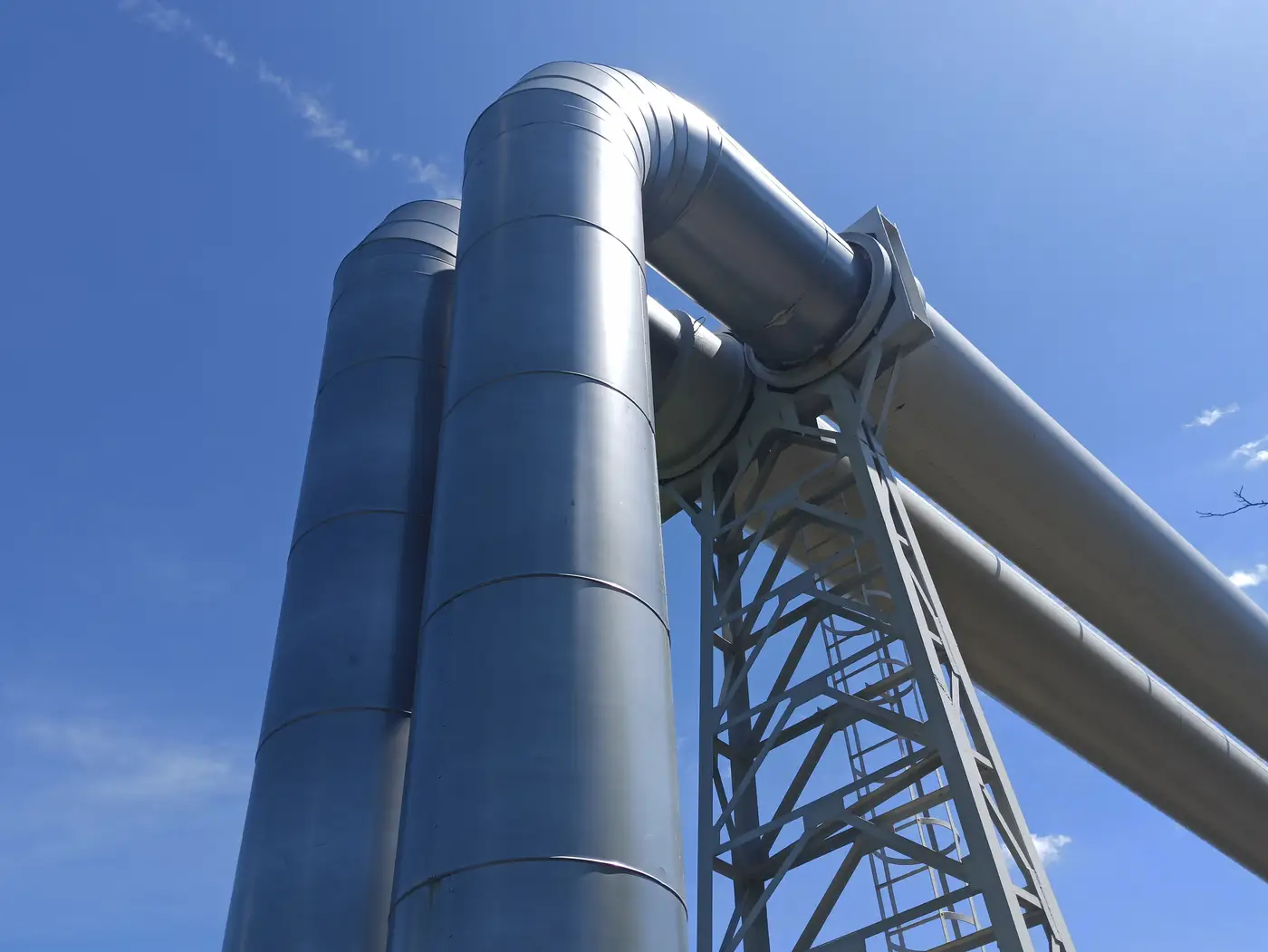
A pipe rack reads as "done" in a satellite image long before it is finished. The steel goes up, the bents line up in neat rows, the shadow pattern looks complete, and from 500 feet of resolution it can pass for a finished rack. It isn't. Steel erection and piping installation are two different schedule milestones, and if you're marking progress against a startup date from imagery alone, mixing them up will put you months ahead of where the project sits.
What bare steel looks like from above
Pipe rack bents (the vertical columns and horizontal beams that carry the lines) go up early, usually in a module yard sequence or stick-built in place. In VHR imagery at 0.5 m GSD, bare steel shows up as a regular grid: evenly spaced columns, consistent shadow intervals, and a rack deck with nothing sitting on top of it. The giveaway is the shadow geometry. A bare rack throws a clean, repeating shadow pattern off the beams themselves, straight lines at consistent intervals, because there's nothing else up there to break it up.
You'll also see this stage paired with sleeper installation on the ground, the below-grade and low-level piping that runs under or beside the rack before the overhead lines go in. If the sleepers are in and the rack deck is bare, piping hasn't started yet no matter how finished the steel looks.
What loaded piping looks like
Once pipe spools start going onto the rack, the shadow pattern changes. Instead of clean beam shadows, you get a denser, layered shadow texture running along the rack's length, multiple parallel lines at different heights throwing shadows that overlap and shift with sun angle. Color and texture change too: insulated lines and bare carbon steel pipe both read differently than the rack's structural steel, usually a flat, continuous tone running along the rack axis instead of the repeating column pattern.
The other tell is tie-in points. Piping installation shows up first at pipe rack intersections and near equipment nozzles, where spools connect the rack to vessels, exchangers, and pumps. If you're tracking a specific line (say, the main process line from a reactor to a fractionator) look for new linear features branching off the rack toward the equipment pad before you look at the rack itself. Tie-ins get piped before the long runs are complete, so they're an earlier signal.
Why this distinction matters for schedule tracking
A contractor's progress report will usually have pipe rack steel erection as a line item separate from piping, and completion percentages can lag between the two by a full quarter or more on a unit of any size. A monthly read based on "the rack looks built" is a read of steel progress. Piping completion is what gates mechanical completion and precommissioning, and it runs on its own timeline. For a trader marking a cargo against a startup date, or a lender checking draw requests against physical progress, that gap is the difference between a project that's on track and one that's quietly slipping.
Track both milestones separately, month over month, instead of treating "rack complete" as a single event. Watch for the shadow pattern to go from clean and repeating to dense and layered, watch tie-in points for new linear features before the main runs are loaded, and cross-check sleeper and underground piping progress against what's happening at deck level. None of this requires being on site. It requires looking at the same footprint every month and comparing what changed.
That's the comparison Refinery Progress runs monthly against VHR imagery: module placement, structure growth, and the change between one month's image and the last, so you're reading what's physically there against the planned startup date instead of taking the contractor's schedule report at face value. If you're tracking a unit through steel, piping, and mechanical completion and want an outside read on where it actually stands, that's the use case worth getting on the waitlist for.