Module yard assembly vs. stick-built construction: telling them apart in satellite imagery
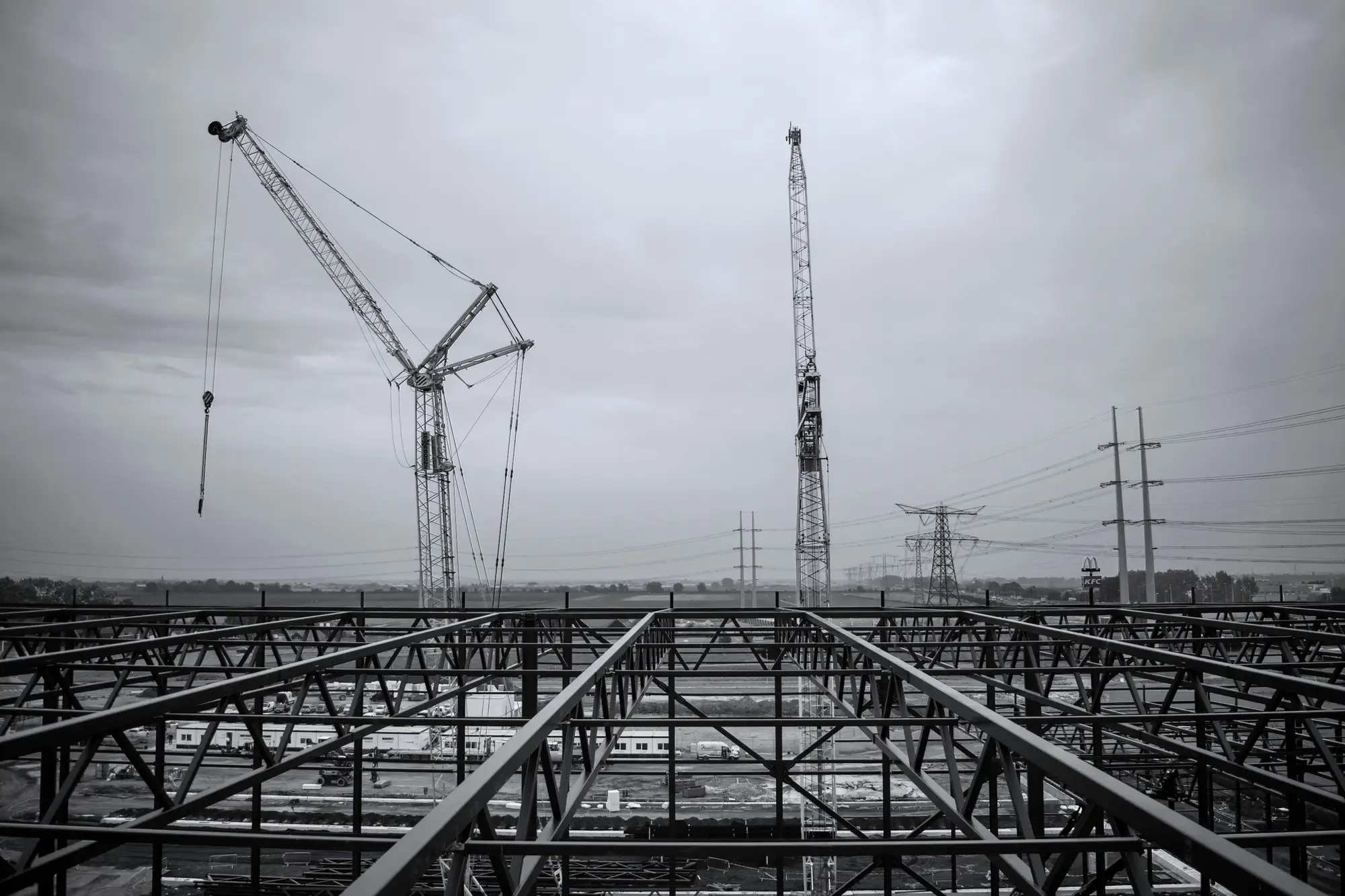
If you've spent any time comparing an EPC's monthly progress report against what you can see of the site, you already know the two construction methods don't leave the same footprint. Module yard assembly and stick-built construction grow differently on the ground, and once you know what to look for, the difference shows up clearly in VHR satellite imagery, month over month.
This matters because the two methods carry different schedule risk. A modular job can look static on site for quarters at a time while the real work, and the real risk, sits at a fabrication yard you can't see from the refinery fence line. A stick-built job shows its risk in plain sight: steel erection pace, scaffolding density, the rate concrete gets poured. Knowing which one you're looking at changes what you should be worried about.
What module yard assembly looks like from above
Modular construction ships large, pre-built process units as single pieces, trucked or barged in and set onto prepared foundations. From imagery, the tell is sudden, discrete appearance: a unit shows up essentially whole rather than growing in stages.
Look for a laydown or module yard adjacent to the main plot, often with rectangular shapes sitting in rows that don't match the final plant layout. Those are modules staged before final placement. Then watch for self-propelled modular transporters (SPMTs), long low-profile vehicles that show up as thin rectangular shadows near the lift path. When a module moves from yard to foundation, you'll see a rectangular footprint disappear from the staging area and appear, fully formed, on the unit pad in the same or the next pass. There's no scaffolding buildup first, no partial steel. It's there, then it's placed.
Heavy-lift cranes are the other signature. Two cranes working in tandem, visible as paired dark shapes with long boom shadows, usually mean a module lift is underway. If you see that configuration recur month after month at the same spot, modules are still arriving and being set, which tells you the fabrication supply chain is still feeding the site on schedule.
What stick-built construction looks like from above
Stick-built work is assembled piece by piece on site: structural steel erected member by member, pipe spools welded in place, equipment set and tied in individually. From imagery, this reads as slow, visible accretion rather than sudden placement.
Expect a steady month-to-month creep in footprint and height. Scaffolding density is a good proxy for active work. A unit under active stick-built erection usually shows a dense grid pattern around the structure that thins out as work finishes and the scaffold comes down. Crane activity tends to be smaller, single-crane lifts rather than tandem heavy lifts, moving between adjacent work fronts rather than parked at one spot for weeks.
Pipe rack progress tracking is one of the clearer stick-built signals. Pipe racks go up in a recognizable sequence: columns first, then horizontal pipe rack sections, then the pipe runs laid across them. In imagery this shows as a skeletal grid that fills in over several months, row by row, rather than appearing as a finished block. A pipe rack that shows columns but no horizontal members three months running, after being scheduled to top out, is a slip worth asking about on the next call.
Why the distinction changes what you track
A trader or lender pricing startup-date risk needs to know which failure mode they're exposed to. On a modular job, missing modules in the yard or an absent SPMT pattern for several consecutive passes points to a fabrication or logistics problem somewhere upstream, often overseas, that won't show up in the EPC's on-site percent-complete number. On a stick-built job, the warning sign is simpler: structure height and footprint that stop moving between monthly passes when the schedule says they shouldn't.
Either way, the EPC's own progress curve is a self-reported number. Refinery Progress reads module placement and structure growth straight from monthly VHR imagery, so traders, lenders and EPC teams get an outside-the-fence check on the schedule instead of taking the contractor's word for it.
If you're trying to reconcile a reported percent-complete against what's actually standing on site, that's the gap this is built to close.