LNG tank hydrotest: what it is and why it signals mechanical completion
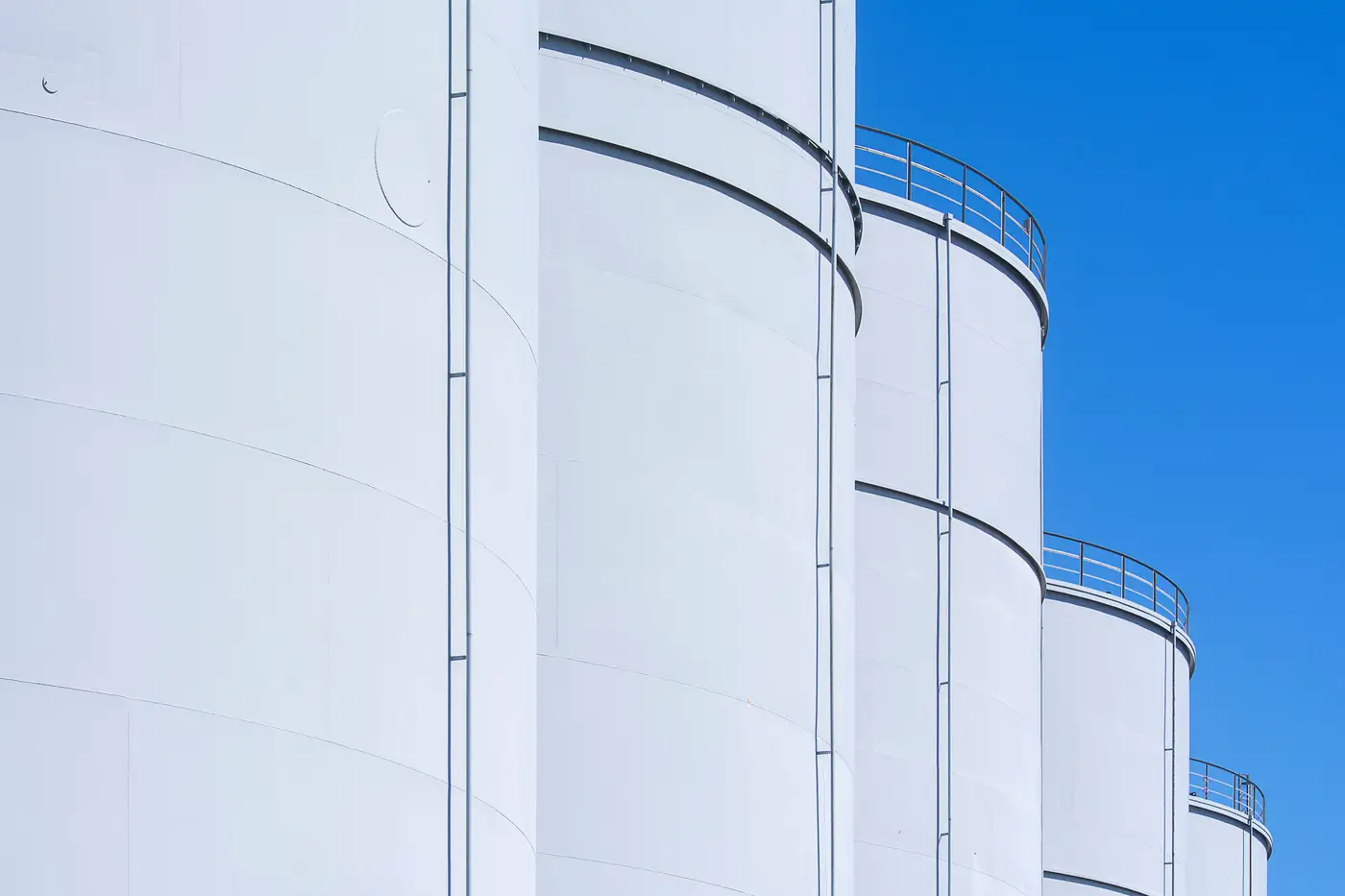
An LNG tank hydrotest is exactly what it sounds like: the tank gets filled with water, not product, and held under load to prove the structure and the welds before anyone trusts it with cryogenic liquid. For a full-containment tank, that means filling the inner 9% nickel steel tank (or the outer concrete containment, depending on the test sequence the EPC has specified) to check for leaks, check weld integrity, and let surveyors read settlement plates around the foundation ring while the load is on.
It is not a quick step. Filling a tank that size takes days on its own, and the hold period, the settlement readings, the partial drain-downs to test at different levels, and the final full drain and dry-out can stretch the hydrotest window into several weeks. Engineers are watching foundation settlement specifically, because a tank that settles unevenly under water load is a tank that will settle unevenly under LNG load, and nobody wants to find that out after first cargo.
Why it reads as a mechanical completion signal
Once the tank passes hydrotest and gets drained and dried, the work around it changes character. Scaffolding comes down off the tank shell. Crane activity that had been stacking roof panels and completing the dome shifts toward the piping racks, the compressor area, or wherever the next critical path item sits. Insulation panels start going up on the inner tank. The laydown yard near the tank empties out of structural steel and starts filling with piping spools and electrical cable drums instead.
That shift is why hydrotest matters to anyone tracking the project against a planned startup date rather than just reading the contractor's monthly report. A tank under hydrotest is structurally finished. Everything after that point, insulation, instrumentation, nitrogen purge, cooldown, is pre-commissioning work rather than construction. If a schedule says the tank is "mechanically complete" but a site still shows scaffold on the shell and no sign of the drainage berms or temporary piping a hydrotest needs, that's a gap worth asking about before it shows up as a delay in month six.
What shows up in imagery, and what doesn't
From outside the fence, you won't see the pressure gauges or the weld inspection reports. What you can see, at monthly cadence, is the sequence around the event: the scaffold strike, the change in crane position, the appearance and then disappearance of temporary water-handling infrastructure near the tank pad, and the slower but steady change as insulation and cladding start covering the bare tank wall. None of that confirms the hydrotest passed on its own merits. It confirms that the project moved through the stage where a hydrotest would have had to happen, on roughly the timeline the schedule claims.
That is the use case for an independent progress read like the one laid out at refineryprogress.com: comparing what a module placement and structure growth trend shows month over month against what the EPC's schedule says should be happening. A hydrotest that the schedule says closed out in March but that imagery still shows scaffolded in May is the kind of discrepancy that matters to a lender covenant or a trader's delivery window long before it reaches a formal schedule slip notice.
A few things worth knowing going in
Hydrotest sequencing varies by tank design. Single-containment and full-containment tanks don't test the same way, and some EPCs test the outer wall first, others the inner tank. The point that holds across designs is the same: it's a hard structural milestone, it has a visible before-and-after on site, and it sits late enough in the build that a miss here tends to compress whatever buffer was left before the planned startup date.
It's also worth remembering that a passed hydrotest isn't the same thing as mechanical completion on the whole unit. The tank can be structurally sound while flare systems, compressor trains, or utility interconnects are still months out. Treat it as one checkpoint among several, not the finish line.
If you're trying to confirm where a tank sits against the schedule you were handed, that's the kind of monthly read Refinery Progress is built to give you.